
WHEELED-BIN SIDE-LOAD BIN WASHER S.L.1100
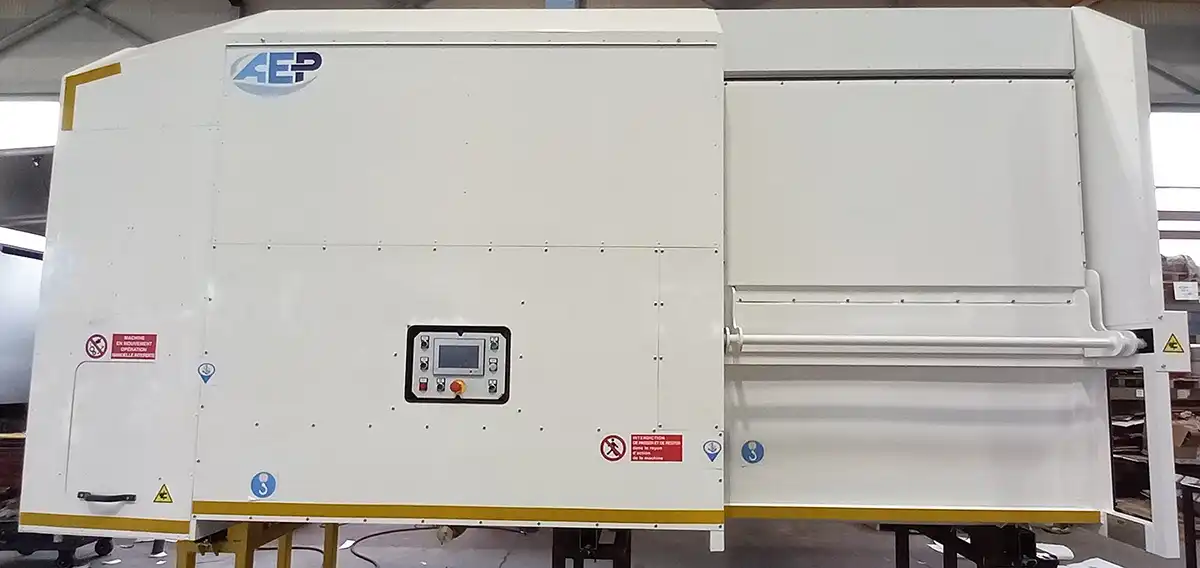
DATA SHEET
| Brand | Model | Wheelbase | ||||
|---|---|---|---|---|---|---|
| ISUZU | NQR90M | 3815 | ||||
| 1 | POSSIBLE vehicles | |||||
| PTO | - Linked to the gear | |||||
| 2 | Water tank divided in parts | Construction material | Tank | AISI 304 STAINLESS STEEL | ||
| Geometric capability CLEAN WATER | LITRES 2.350 | |||||
| Geometric capability DARK WATER | LITRES 2.000 | |||||
| 3 | Washing chamber | Construction material | Structure | LIGHT ALLOY | ||
| Chamber | LIGHT ALLOY | |||||
| Covering | LIGHT ALLOY | |||||
| 4 | Rear box | Construction material | Structure | LIGHT ALLOY | ||
| Covering | LIGHT ALLOY | |||||
| 5 | Turning container device | Construction material | Structure | AISI 304 STAINLESS STEEL | ||
| COMB joint | For containers of Lt. 120/240/360 | |||||
| DIN 30700 joint | For containers from Lt. 660 to Lt. 1100 | |||||
| 6 | Washing system | Sequential modality | INTERNAL - With n° 2 AUTO-ROTATING HEADS | |||
| EXTERNAL - With FIXED BARS AISI 304 steel with FIXED STREAM NOZZLES | ||||||
| Washing time | Set up on monitor | |||||
| Water use | 13,litres per 20-second wash cycle | |||||
| Stop and Go | 67 seconds with 20-second wash cycle | |||||
| 7 | High pressure pump | Costruction material | Stainless steel pistons with plasma ceramic finishing touch | |||
| Steel control pistons with superficial treatment | ||||||
| Flow rate | Litres/minute | 40 | ||||
| Max pressure | Bar | 100 | ||||
| 8 | Dirty water pump | Self-priming centrifuge with open impellers | ||||
| Flow rate | Litres/minute | 100 | ||||
| 9 | Clean water loading system | Water supply network pressure with UNI 45 hydrant joint | ||||
| 10 | Dirty water drain system | With 3” valve | ||||
| 11 | Hydraulic services oil pump | Flow rate | Litres/minute | *** 17 | ||
| *** flow rate might vary depending on the model of the chassis | ||||||
| 12 | Washing water pressure oil pump | Flow rate | Litres/minute | *** 34 | ||
| *** flow rate might vary depending on the model of the chassis | ||||||
| 13 | PLC monitor | N° 1 - da 7’’ COLOUR TOUCH SCREEN | ||||
| 14 | Security devices | N° 2 orange rotating lights | ||||
| N° 1 working area LED light | ||||||
| N° 2 lateral safety bars | ||||||
| N° 3 stop buttons (2 control area + 1 chassis cab) | ||||||
| Automatic slowing down in case of wrong movement | ||||||
| Alarms and visual signs in case of problems | ||||||
| 15 | Optional on request | Hot water with anti-lime scale system | ||||
| Hose reel kit and H.P. lance 20 mt. | ||||||
| Detergent and Disinfection kit | ||||||
| Rear camera | ||||||
The above mentioned data is not binding and moreover is referring to the maximum potentiality of the single details.
AEP Allestimenti Speciali srl , on the pursuit of S&D politic of own products, reserves to make changes without notifications in respect of the reported data in this file.
WHEELED-BIN SIDE-LOAD BIN WASHER MODEL S.L.1100
1. TANK
To maintain the correct weight distribution on the vehicle’s axles, the tank is composed of two interconnected external tanks for clean water and a central one for the dirty water coming from the washing chamber. This configuration ensures, in addition to compliance with axle load limits imposed by regulations, safe vehicle handling throughout the entire bin-washing operation cycle.
The tank has a parallelepiped shape and is constructed from AISI 304 stainless steel sheet, with a geometric capacity of 2,000 L and reinforced ribs. The tank is also equipped with an external column level indicator, manholes for inspection and cleaning, and manual ball valves.
2. WASHING CHAMBER
STRUCTURE
The structural framework is made of aluminum profiles and is internally lined with aluminum panels.
DIRTY WATER COLLECTION AREA
At the bottom of the chamber, there is an area designed to collect dirty water and solid residues that may be present inside the bin. To prevent solid particles from entering the pipes system, a stainless steel mesh filter is installed.
LOWER DOOR
A fully sealed door is located at the lower rear of the washing chamber (corresponding to the position of the dirty water collection area) for quick and easy inspection and cleaning of the washing chamber. A rubber gasket ensures watertight sealing.
DIRTY WATER PUMP
Hydraulically driven, it transfers dirty water from the collection area to the central tank. Its flow rate is 100 L/min.
3. LIFTING DEVICE
The device for engaging and tipping bins is mounted on the right side of the equipment and is suitable for picking up, lifting, and rotating bins compliant with DIN standards, from 660 L to 1,100 L. Additionally, a comb-type attachment system is provided for containers of 120 L, 240 L, and 360 L.
With our system, it is possible to engage and subsequently wash two bins at a time for the 120 L, 240 L, and 360 L sizes.
The structure of the device is made of stainless steel and is equipped with hydraulic cylinders that enable its movement; rotation is performed by a hydraulic actuator, ensuring smooth and continuous operation.
The operator can supervise the entire cycle from the control panel mounted on the rear-right side of the equipment.
4. PTO SYSTEM
The entire cycle is activated via the PTO unit using the button on the control panel. The PTO is directly connected to the vehicle’s gearbox.
5. HYDRAULIC SYSTEM
The hydraulic system of the bin-washing equipment, which operates the various functions and devices of the unit, is divided into two separate circuits, alternately controlled by a diverter valve:
- No. 1 for washing devices and the transfer pump
- No. 1 for the bin-lifting/tipping device and all its operations
Each circuit, when in standby, is unloaded via a solenoid valve dedicated to returning the oil to the tank, and is also protected by a properly calibrated pressure relief valve. Both circuits are powered by a hydraulic pump directly connected to the power take-off, with independent suction and delivery lines.
6. WATER SYSTEM
The water system is designed to draw clean water from the dedicated tank, pressurize it, and direct it to the points of use.
Its main components are:
- Ultra-high-pressure pump for internal and external washing, with special pistons, flow rate of 40 L/min, maximum pressure 100 bar;
- Pneumatically operated valves for directing pressurized water to the various services;
- Water delivery device for the intended use;
- Water filter;
- Pressure relief valve.
The drive is provided by a hydraulic motor, which is in turn powered by a pump connected to the equipment’s power take-off.
7. WASHING SYSTEM
7.1 INTERNAL WASHING SYSTEM
The internal washing of the bins is carried out using two self-rotating heads. During the washing cycle, these heads move vertically along the bin walls and maintain their position at height for more effective cleaning. Washing times can be set between 5 and 30 seconds and are repeatable.
7.2 EXTERNAL WASHING SYSTEM
The washing of the container’s external walls occurs sequentially after the internal wash and is performed by bars equipped with special flat-jet nozzles, mounted on the inner walls of the washing tank and on the top door. The positioning of the bars, as well as the total number of nozzles, is designed according to the range of bins to be washed. Water pressure and jet type ensure proper cleaning of the bin’s external surface, with particular attention to the areas most exposed to dirt. An icon on the touch monitor allows selection of the washing cycle: internal (default setting) or both internal and external. The washing system is divided into two branches—lower and upper—which operate alternately.
8. ELECTRICAL SYSTEM
The electrical system oversees the operation of all solenoid valves and safety devices. Parameter settings can be programmed via a touch screen monitor located on the right side of the equipment, which is connected to a PLC housed in the electrical panel. The entire system is equipped with protective fuses.
The electrical system also includes a white work light for illuminating the operational area during nighttime and two orange rotating beacons (one at the front and one at the rear of the vehicle) to signal the equipment’s operational phase. Additionally, the equipment is fitted with all lighting and signaling devices required by the current Highway Code, positioned to ensure maximum visibility.
9. CONTROL PANEL
The control buttons and monitoring devices for the equipment are located on a touch screen positioned at the rear, right side of the equipment. All commands are clearly indicated with icons.
The touch screen also provides access to all sensor controls and the page for the equipment’s general parameters.
An additional control panel is installed in the vehicle cab, but it does not include a touch screen.
10. ACCESSORIES
The control buttons and monitoring devices for the equipment are located both on the touch screen monitor and on the armrest, positioned ergonomically within the vehicle cab.
Additionally, the monitor provides access to all controls for the various sensors and includes a section for modifying the equipment’s general parameters.
11. OPTIONAL
- Detergent system
- Disinfectant system
- High-pressure hose reel with lance
